18 Dog Years in Human Years: Your Senior Dog's Real Age

An 18-year-old dog is roughly 88 in human years if she's small, 96 if medium, and around 110 if she's a large breed. If you have an 18-year-old dog, you have done something genuinely uncommon, and the number is worth sitting with: your dog has reached an age most dogs never see.
Eighteen sits at the far edge of the conversion charts. Most published tables stop at 16, because so few dogs go beyond it that the data thins out. The figures below extend the same size-adjusted curve that veterinarians use for the years before, which is the honest way to answer the question.
The Quick Answer by Size
| Your dog's size | Adult weight | 18 years is about |
|---|---|---|
| Small | Up to 20 lb | 88 human years |
| Medium | 21-50 lb | 96 human years |
| Large | 51-100 lb | 110 human years |
| Giant | Over 100 lb | Effectively unheard of |
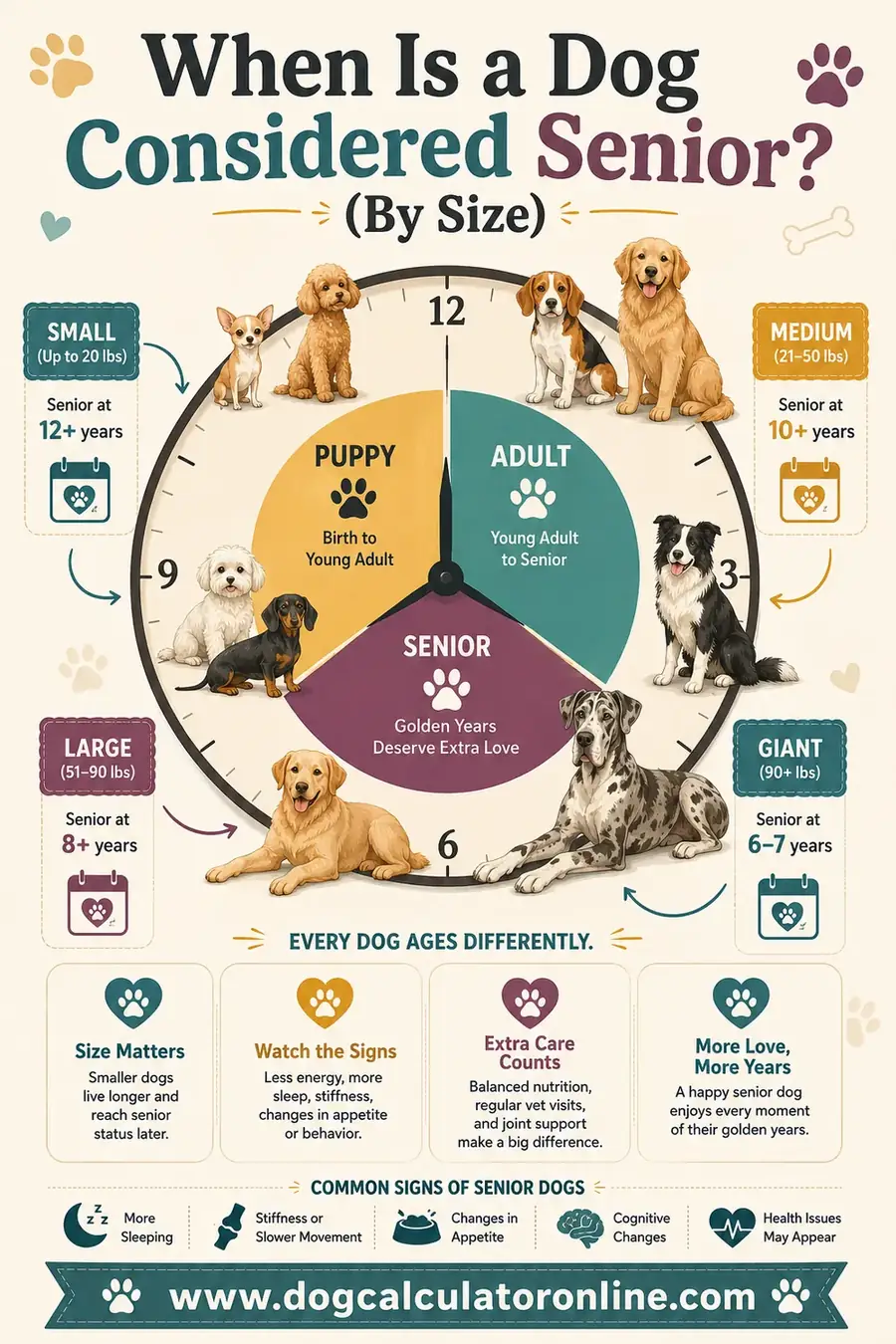
The giant row is not a dodge. Giant breeds typically live 7 to 10 years, and an 18-year-old Great Dane or Mastiff would be far outside anything documented. If you have one, the chart is not the interesting fact about your dog.
A few dogs beat these curves entirely. The oldest reliably recorded dogs have reached their late twenties, and they have overwhelmingly been small or medium. Longevity at the top end is not evenly distributed across sizes.
The dog age calculator applies the same size-adjusted method if you want a figure for a different age.
How These Numbers Are Built
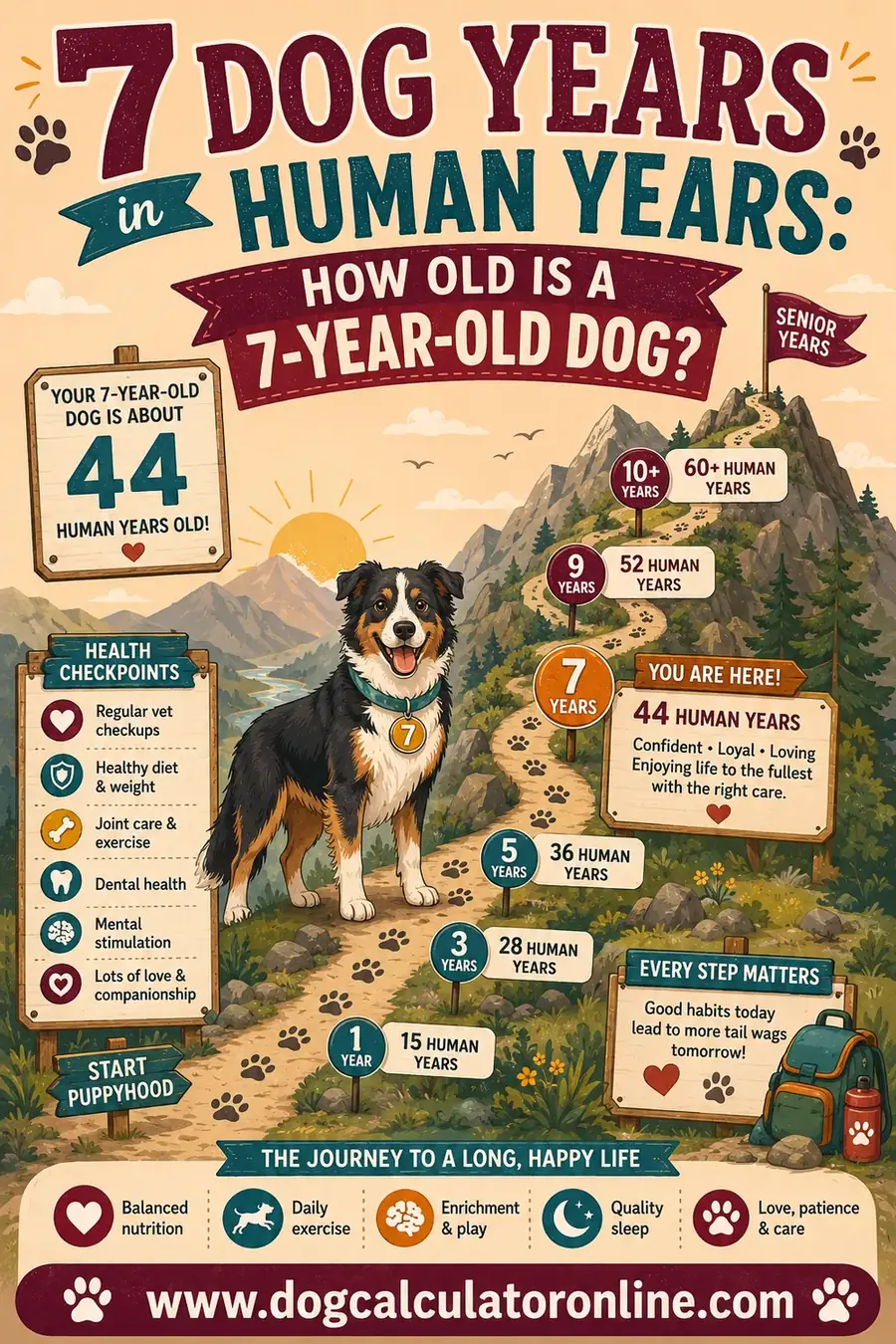
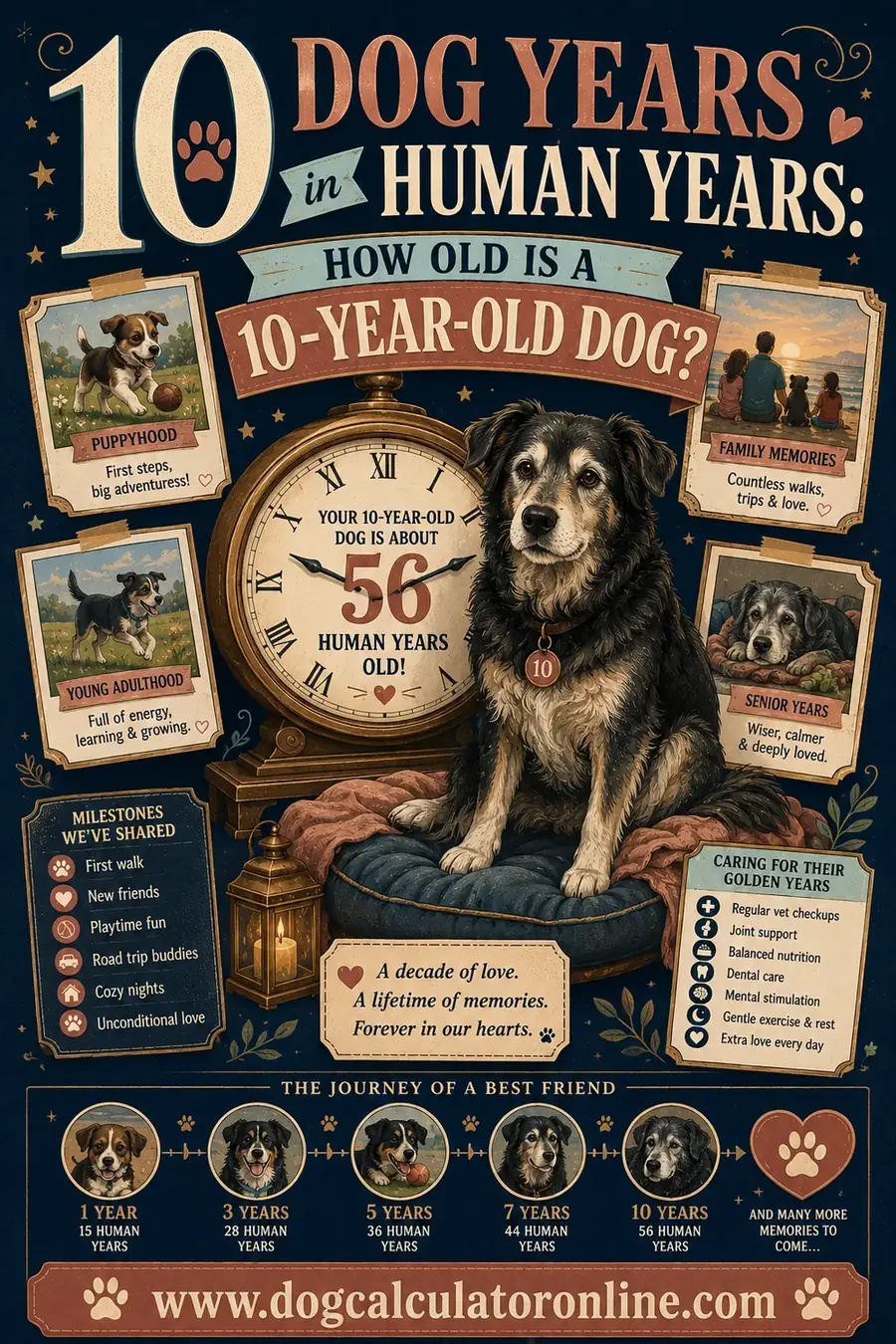
The modern conversion isn't a flat multiplier. It's staged, because dogs age fastest early and then settle into a steadier rate:
- Year one is worth about 15 human years for most dogs, 12 for giant breeds
- Year two adds about 9 more, putting a two-year-old at roughly 24
- Every year after that adds roughly 4 for a small dog, 4 to 5 for a medium one, 5 to 6 for a large one, and about 7 for a giant breed
Follow that forward and you get the fan-out that defines the back half of a dog's life:
| Dog's age | Small | Medium | Large |
|---|---|---|---|
| 10 years | 56 | 60 | 66 |
| 12 years | 64 | 69 | 77 |
| 14 years | 72 | 78 | 88 |
| 15 years | 76 | 83 | 93 |
| 16 years | 80 | 87 | 99 |
| 17 years | 84 | 92 | 104 |
| 18 years | 88 | 96 | 110 |
Two honest caveats about the last few rows. First, the conversion is a model, not a measurement, and it gets rougher the further out you go. Second, at this age the human-equivalent number tells you less than what you can see with your own eyes. A comfortable, alert 18-year-old dog is doing better than the chart suggests, and a struggling one is doing worse. Trust the dog over the table.
Why the Seven-Year Rule Fails Completely Here
Multiplying by seven gives 126 for an 18-year-old dog of any size. Nobody believes that, and it's a useful illustration of why the rule was always broken.
The seven-year rule came from dividing an average human lifespan by an average dog lifespan somewhere in the mid-twentieth century. It was never derived from how dogs actually age. It underestimates puppies badly — a one-year-old dog is physically mature, which no seven-year-old child is — and it ignores the single biggest variable in canine aging, which is body size.
Eighteen Is Rare, and Which Dogs Get There
Some context for how unusual this is.
Small breeds dominate extreme old age. Chihuahuas, Dachshunds, Toy Poodles, Jack Russells, Miniature Pinschers, Shih Tzus, Lhasa Apsos, Pomeranians and small terrier mixes are the ones most often reaching 17, 18 and beyond. Mixed-breed small dogs do particularly well.
Medium dogs reaching 18 are uncommon but real. Beagles, small Border Collie mixes and Cocker Spaniels occasionally get there.
Large dogs at 18 are exceptionally rare. Most large breeds average 10 to 12 years, so 18 is roughly the equivalent of a human reaching 110.
The factors that show up again and again in dogs who reach these ages are unglamorous: staying lean their whole lives, being spayed or neutered, consistent veterinary care, good dental health, regular moderate exercise, and being a mixed breed or a small breed without a heavy load of inherited conditions. Genetics matters enormously and you can't change it. The rest you can.
18 Years Old, Broken Out by Breed
If you'd rather find your dog than weigh her, here's where the common long-lived breeds land at 18, alongside a rough sense of how far past their typical range they've gone.
| Breed | Size class | 18 years is about | How unusual |
|---|---|---|---|
| Chihuahua | Small | 88 | Uncommon but not rare |
| Toy Poodle | Small | 88 | Uncommon but not rare |
| Dachshund | Small | 88 | Uncommon |
| Jack Russell Terrier | Small | 88 | Uncommon |
| Shih Tzu | Small | 88 | Uncommon |
| Pomeranian | Small | 88 | Uncommon |
| Miniature Schnauzer | Small | 88 | Rare |
| Beagle | Medium | 96 | Rare |
| Cocker Spaniel | Medium | 96 | Rare |
| Border Collie | Medium | 96 | Rare |
| Australian Cattle Dog | Medium | 96 | Rare, though the breed is known for longevity |
| Labrador Retriever | Large | 110 | Exceptional |
| German Shepherd | Large | 110 | Exceptional |
| Golden Retriever | Large | 110 | Exceptional |
| Great Dane | Giant | Off the chart | Not documented |
Mixed breeds go by adult weight rather than ancestry, and small mixed-breed dogs are, as a group, among the most likely of all dogs to reach this age.
What 18 Actually Looks Like
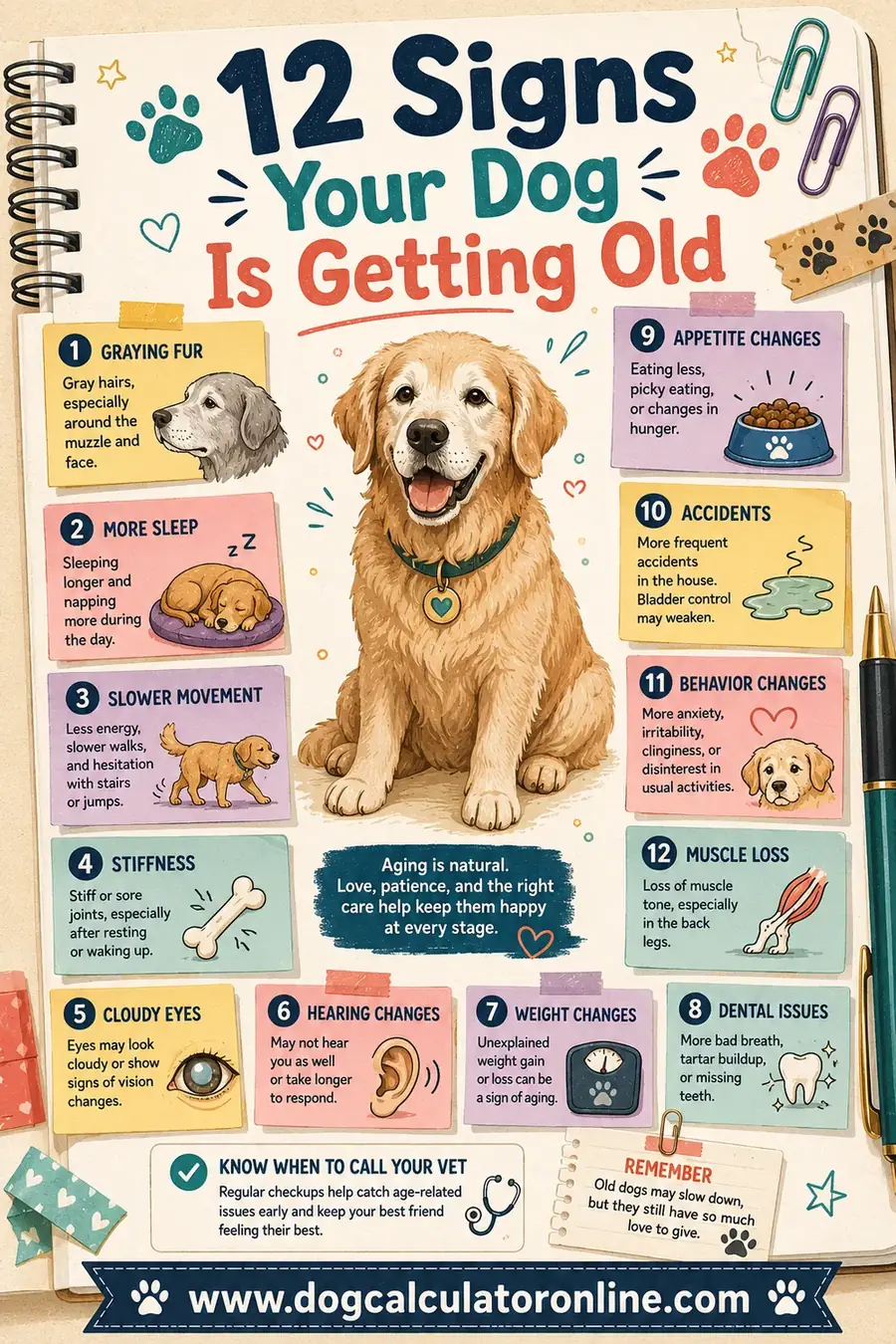
An 18-year-old dog is a very old dog, and the honest picture includes real limitation alongside real quality of life.
Sleep dominates the day. Eighteen to twenty hours is typical. Deep sleep means she often won't wake when you come in, and startling her awake can produce a snap that has nothing to do with temperament.
Mobility is limited and needs help. Most dogs this age have significant arthritis. Back legs weaken first. Slick floors become genuinely dangerous. Stairs may be off the table entirely. Many dogs this age need a hand getting up, and a support sling or a harness with a handle becomes normal equipment rather than a sad concession.
Hearing is often mostly gone, and sight is reduced. Deafness at this age is common and usually complete or near it. Vision typically holds up better than hearing, though it dims. A dog who is both deaf and partially sighted relies heavily on smell, routine and the furniture staying where it is.
Cognitive change is common. Nighttime pacing, staring at nothing, standing in corners, getting confused in familiar rooms, reversed sleep cycles, and lapses in house training all show up. This is canine cognitive dysfunction, it's the closest thing dogs have to dementia, and it is not something you have to simply accept — there are dietary approaches, supplements and medications your vet can discuss.
Body condition changes. Many very old dogs lose muscle over the spine and hindquarters even when their weight stays steady. Coats thin. Nails grow faster because they wear down less. Some dogs get bonier, some get puffier, and either can be normal or can signal something worth checking.
Some things don't change. Appetite often stays strong. Interest in you often stays completely intact. Many 18-year-old dogs still ask for dinner with real enthusiasm and still want to be in whatever room you're in. That matters, and it's a fair thing to weigh.
Care for a Dog at This Age
Vet visits every three to six months. At 18, months matter. Bloodwork, urine testing and blood pressure checks catch kidney, liver, thyroid and heart changes early enough to manage. Many conditions at this age are manageable for a long time when caught in time and difficult when caught late.
Manage pain properly. Arthritis pain in very old dogs is widely under-treated, largely because owners read the slowing down as just being old. It usually isn't just age; it's pain, and pain is treatable. Never give human pain relievers — ibuprofen, acetaminophen, naproxen and aspirin are all dangerous to dogs. Ask your vet about a proper plan, which may include medication, joint support, physical therapy or acupuncture.
Make the house work for her. This is where you'll get the biggest quality-of-life gain for the least money. Non-slip runners on every hard floor she crosses. A ramp instead of any jump. An orthopedic bed somewhere warm and out of a draft. Raised food and water bowls. Water in more than one room. Night lights along the route to the door. Baby gates at the top of any stairs.
Keep her moving, at her pace. Short and frequent beats long and occasional. Even a few minutes of slow sniffing in the yard preserves muscle and gives the day some shape. Let her decide when to turn around.
Expect accidents and don't punish them. House training lapses at this age come from weakened bladder control, reduced mobility, or cognitive change. More frequent trips outside, a waterproof bed cover, and washable pads near her sleeping spot solve most of it.
Keep the routine steady. Predictability is a real kindness to a dog who can't hear well and may be confused. Meals at the same times, furniture in the same places, the same route on the same walk.
Watch for changes rather than aiming for a standard. At 18 the useful measure isn't how she compares to a healthy dog, it's how she compares to herself last month. A new cough, a change in drinking, a lump, a shift in appetite, a change in how she gets up — all worth a call rather than a wait.
Thinking About Quality of Life
At this age, many owners start quietly wondering how to tell whether their dog is still enjoying life. It's a fair question to ask and it isn't disloyal.
Vets often suggest tracking a handful of simple things over time rather than trying to judge one day in isolation: is she eating, is she drinking, can she get comfortable, does she still want company, does she still show interest in anything, is she mostly clean and dry, and are the good days outnumbering the hard ones. Writing a one-line note each evening for a couple of weeks gives you something honest to look at, because day-to-day memory smooths out trends that a written record makes obvious.
If you're uncertain, ask your vet directly. It's one of the most common conversations they have, they will not think less of you for asking early, and many practices have quality-of-life assessments they can walk you through. Having the conversation before you need it is a kindness to yourself.
For now, though: an 18-year-old dog is a remarkable thing. Warm bed, soft floors, managed pain, familiar routine, and someone paying attention. That's most of the job.
Frequently Asked Questions
What is 18 dog years in human years? Roughly 88 for a small dog, 96 for a medium dog, and around 110 for a large dog. Giant breeds effectively don't reach 18, so there's no meaningful figure for them. The multiply-by-seven rule would give 126 for all sizes, which is not accurate for any of them.
Is 18 old for a dog? Very. Most dogs never reach it. Small breeds account for the large majority of dogs who do, and an 18-year-old large-breed dog is genuinely exceptional, comparable to a human living past 110.
What is the oldest a dog can live? The oldest reliably recorded dogs have reached their late twenties, and they have been small or medium dogs. Anything past 20 is extraordinarily rare, and past 25 is essentially unheard of outside a handful of documented cases.
How do I care for an 18-year-old dog? Vet checks every three to six months with bloodwork, a proper pain management plan from your vet rather than any human medication, non-slip flooring and ramps, an orthopedic bed somewhere warm, short frequent walks at her pace, and a steady routine. Watching for changes from her own baseline matters more than comparing her to a younger dog.